Single Girder vs Double Girder Overhead Crane: Which Design Fits Your Bay?
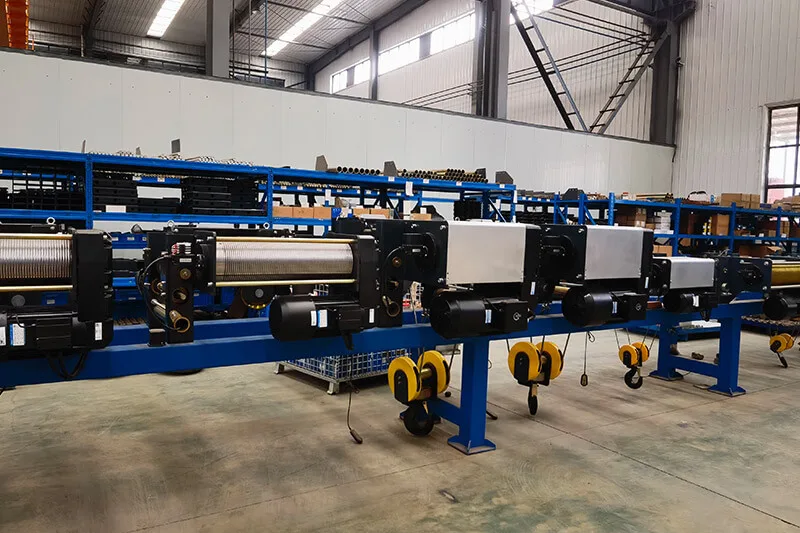
Single girder and double girder overhead cranes compared — capacity, headroom, cost and when each design is the right choice for your workshop.
Why This Matters for Your Project
The single girder versus double girder decision is the first fork in almost every overhead crane project, and it is where buyers lose the most money — not by picking the wrong crane, but by picking the right crane for the wrong reasons. The two designs carry similar loads in the low-to-mid range, so the deciding factors are headroom, trolley design, duty class and what happens after you install the crane, not the girder count itself.
Here is what our engineers actually check when a buyer asks us to choose between the two.
Single Girder: One Beam, One Hoist, Maximum Headroom
A single girder overhead crane uses one bridge beam with an electric hoist that runs on the lower flange of the beam. Because there is only one beam and the hoist sits below it, the hook can ride higher relative to the runway — meaning more lifting height in the same building. That is the single girder's biggest practical advantage.
Our LD single girder electric hoist overhead crane covers 1–32 t with spans of 7.5–28.5 m and working classes A3–A4, which suits machining shops, assembly lines, warehouses and maintenance bays. The HD European type single girder crane extends that into FEM 2m (ISO M5) duty with a lighter, more compact European-style profile. Single girder is also lighter per ton of capacity, which means a lighter runway and lower building loads.
Double Girder: Two Beams, A Real Trolley, Heavy Duty
A double girder overhead crane runs a proper trolley between two bridge girders, with the hoist mechanism inside the trolley rather than hanging below a beam. The design gives more headroom loss but far more capacity range, higher duty capability and the option of auxiliary hoists and cabin operation.
The QD double girder bridge crane runs from 5 t to 800 t with working classes A5–A8 — the classes used for continuous, heavy industrial duty. If your process runs near 24 hours, if you need 50 t or more, or if you want a second hoist on the same crane, double girder is the design that scales.
Headroom: The Number Most Buyers Forget
Headroom is the vertical distance from the runway rail to the top of the crane — the space the crane itself occupies. A single girder crane needs less headroom, so in a low building you can either fit more lifting height or use a smaller building envelope. A double girder crane loses more headroom, but the girder depth gives stiffness that matters at longer spans and heavier loads.
The practical rule: if your building height is tight and your loads are under 32 t, single girder usually wins on usable lifting height. If you have generous headroom and heavy or continuous duty, double girder is the safer engineering choice.
Cost: The Girder Is Not the Whole Story
At the same capacity, a single girder crane typically costs 10–20% less than a double girder — and the savings compound, because the lighter crane needs a lighter runway and less building reinforcement. But the comparison flips once you need A5 or higher duty, because single girder cranes in that range push into oversized hoists and heavier beams.
Compare the total installed project: crane plus runway plus building work. For a 10 t, A3 workshop crane, single girder is almost always the lower-cost answer. For a 50 t, A6 production crane, double girder is the only serious answer. The zone in between — 16–32 t, A4–A5 — is where the decision needs real numbers, which is exactly the information to send to our engineers.
Auxiliary Lifts and Future-Proofing
If your process will ever need to lift a long workpiece with two hooks, or rotate heavy equipment during maintenance, double girder's auxiliary hoist option is a genuine capability, not a luxury. Retrofitting a second hoist onto a single girder crane is impractical; choosing double girder at the start is cheap by comparison. If you are reasonably sure the extra hook will stay unused, that money is better spent elsewhere.
The Structural Details That Actually Differ
Beyond the girder count, the two designs differ in ways that matter for maintenance and day-to-day operation. On a single girder crane, the hoist is a package unit that bolts to the beam flange — when it needs service, the whole hoist can be swapped in a shift. On a double girder crane, the trolley carries the hoist mechanism between the beams, which gives better access to the drum and gearing, but a major trolley repair usually means taking it down to the floor.
End carriage design differs too. Single girder cranes typically use compact end carriages with fewer wheels, which keeps wheel loads lower on the runway. Double girder cranes distribute load across more wheels and larger wheels, which is why they are the standard choice when a plant runs long spans with heavy hook loads. If your runway is already built and the wheel loads are the constraint, this is not a theoretical detail — it can decide which design fits.
Power supply and control layout also follow the design. A single girder crane's hoist travels with the beam, so festoon or cable-reel power distribution is simpler. A double girder crane with a trolley needs a separate trolley power feed, usually a festoon system running alongside the bridge — a small cost, but worth knowing when you compare total packages.
Installation and Building Considerations
Installation complexity follows the same pattern as the crane itself. A single girder crane is delivered in fewer major pieces and can often be erected in a day or two with a mobile crane, because the beam and hoist are lighter. A double girder crane arrives as two girders, a trolley and an end carriage set, and the site needs room to splice and lift the heavier girders.
The building matters as much as the crane. Confirm the column spacing, the crane runway elevation and the clearance to the roof and to adjacent equipment before choosing a design. If the runway is being installed from scratch, the lighter wheel loads of a single girder crane can reduce the steel section of the runway beams themselves — an item buyers rarely price until the structural engineer produces the bill.
Quick Comparison Table
- Capacity: single girder 1–32 t typical (LD series); double girder 5–800 t (QD series).
- Headroom: single girder uses less; double girder loses more vertical space.
- Duty class: single girder A3–A5; double girder up to A8 for continuous work.
- Cost: single girder 10–20% lower crane price and lighter runway.
- Options: double girder supports auxiliary hoist and cabin operation.
- Best fit: single girder for workshops and warehouses; double girder for mills, foundries and heavy production.
The Decision in One Sentence
Choose single girder when the load is moderate, the building is low and the duty is light; choose double girder when you need high capacity, continuous duty or an auxiliary lift. When the two designs both fit on paper, the tie-breakers are headroom and the total installed cost — send your bay height, span and duty cycle to [email protected] or WhatsApp +86 13156233808 and we will run the numbers for you within 24 hours.
Related reading: how to choose the right overhead crane, the full overhead crane range, and our comparison of overhead vs gantry cranes.